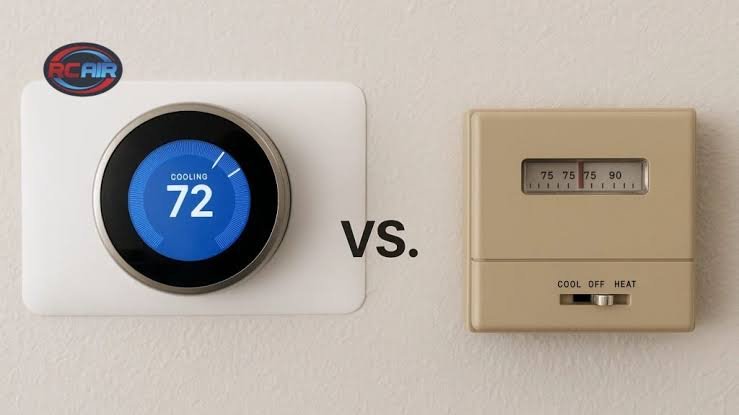

Managing the temperature inside your home can sometimes be difficult, especially when the weather changes throughout the year. During summer, you may want cooler rooms, while winter requires a comfortable heating system. A traditional thermostat can control indoor temperature, but a smart thermostat offers additional features that make temperature management easier.
Smart thermostats allow homeowners to adjust heating and cooling settings through a smartphone, schedule temperature changes, and monitor energy usage. Some models can also learn household routines and automatically adjust settings.
However, choosing the right device can be confusing because different models offer different features, prices, and compatibility options. Before purchasing one, it is important to understand what your home actually needs.
This guide explains the main things to consider when choosing a smart thermostat for your home.
1. Check Compatibility With Your HVAC System
The first step is checking whether a smart thermostat works with your existing heating and cooling system.
Not every thermostat supports every HVAC system. Some models work with central heating and air conditioning, while others support heat pumps, boilers, or multi-stage systems.
Before buying a device, check the manufacturer’s compatibility information. You may need to identify the type of heating and cooling equipment installed in your home.
If you are unsure, ask a qualified HVAC technician to inspect your system. Choosing a compatible thermostat can prevent installation problems and unnecessary expenses.
2. Choose a Thermostat With Easy Controls
A smart thermostat should make temperature control simple rather than complicated.
Look for a model with a clear display, easy-to-understand menus, and convenient temperature adjustment options. A touchscreen can make changing settings easier, while physical buttons may be more comfortable for some users.
Many smart thermostats also include smartphone applications. These apps allow homeowners to change temperatures without walking to the thermostat.
Before purchasing, check whether the application is available for your smartphone and whether its main features require an additional subscription.
3. Look for Energy-Saving Features
One of the main reasons people purchase smart thermostats is to manage heating and cooling more efficiently.
Some models provide scheduling features that allow you to reduce heating or cooling when nobody is home. Others offer energy reports that help you understand how frequently your HVAC system operates.
Certain devices can also adjust temperatures based on household activity or programmed routines.
These features may help reduce unnecessary energy use, but actual savings depend on your climate, insulation, electricity prices, and how you use your heating and cooling system.
Choose a thermostat that offers useful energy-management features without making everyday operation difficult.
4. Consider Wi-Fi Connectivity
Wi-Fi connectivity allows a smart thermostat to communicate with your home network and smartphone.
With a connected device, you can often adjust the temperature while you are away from home. This can be useful if your schedule changes or you want to prepare your home before returning.
Before purchasing, check the Wi-Fi requirements. Some devices support only certain network frequencies, and a weak wireless signal may affect performance.
It is also important to check whether the thermostat continues to provide basic temperature control if your internet connection stops working.
5. Check Smart Home Compatibility
If you already use smart home devices, consider choosing a thermostat that works with your existing ecosystem.
Some thermostats support voice assistants and smart home platforms, allowing users to control temperature through voice commands or connected applications.
For example, you may be able to ask a compatible voice assistant to increase or decrease the temperature.
However, compatibility varies between brands and models. Check the official product specifications before purchasing rather than assuming every smart thermostat works with every smart home system.
6. Understand Installation Requirements
Installation is another important factor when selecting a smart thermostat.
Some models are designed for simple installation, while others require additional wiring or professional assistance. Certain systems need a common wire, often called a C-wire, to provide continuous power.
If your existing thermostat does not have the required wiring, you may need an approved adapter or another installation solution.
Always follow the manufacturer’s instructions. If you are unfamiliar with electrical wiring or HVAC equipment, hiring a qualified professional is a safer option.
7. Choose a Model That Fits Your Budget
Smart thermostats are available at different prices. Basic models usually provide smartphone control and scheduling, while more advanced versions may include occupancy sensors, learning features, and detailed energy reports.
A more expensive device is not automatically the best choice for every home.
Make a list of the features you actually need. If you only want remote temperature control and scheduling, a basic model may be sufficient.
Also consider possible installation costs, subscription fees, and any additional accessories required for operation.
8. Pay Attention to Temperature Sensors
Some smart thermostats support additional room sensors.
These sensors can help monitor temperatures in different areas of the home. This may be useful when one room becomes warmer or cooler than the rest of the house.
For example, a bedroom located upstairs may have a different temperature from a living room downstairs.
However, sensors do not automatically solve every heating or cooling problem. Their usefulness depends on the thermostat’s control system and your home’s HVAC setup.
Check how many sensors are supported and whether they are included with the device or sold separately.
9. Review Privacy and Security Features
Smart thermostats connect to the internet, so privacy and security should also be considered.
Choose a product from a manufacturer that provides regular software updates and clear privacy information.
Use a strong password for your account and enable additional security features when available. Keep your home Wi-Fi network protected with updated security settings.
Before purchasing, review what information the device collects and how the manufacturer uses that information.
A secure smart home device helps protect your connected household equipment.
10. Compare Product Reviews and Warranty
Customer reviews can help you understand how a thermostat performs in everyday situations.
Look for feedback about installation, application reliability, temperature accuracy, connectivity, and customer support.
Do not rely only on star ratings. Read detailed reviews to identify repeated problems that may affect your decision.
You should also check the warranty period and the manufacturer’s support options. A clear warranty can provide extra confidence if the device develops a technical problem.
Common Mistakes to Avoid
Some homeowners purchase a smart thermostat without checking their HVAC compatibility. This can lead to installation difficulties or a device that does not support all available heating and cooling features.
Another mistake is paying for advanced functions that are rarely used. It is better to select a model based on your actual household needs.
Ignoring Wi-Fi requirements, installation costs, and privacy settings can also create problems later.
Taking time to compare different models can help you make a better purchasing decision.
Final Thoughts
Choosing the right smart thermostat can make home temperature management more convenient. Features such as Wi-Fi control, scheduling, energy reports, and smart home compatibility can improve everyday comfort.
Before purchasing, check HVAC compatibility, installation requirements, available features, and your budget. Read customer reviews and understand the manufacturer’s warranty.
The best smart thermostat is not necessarily the most expensive one. It is the model that works with your heating and cooling system and provides the features your household actually needs.